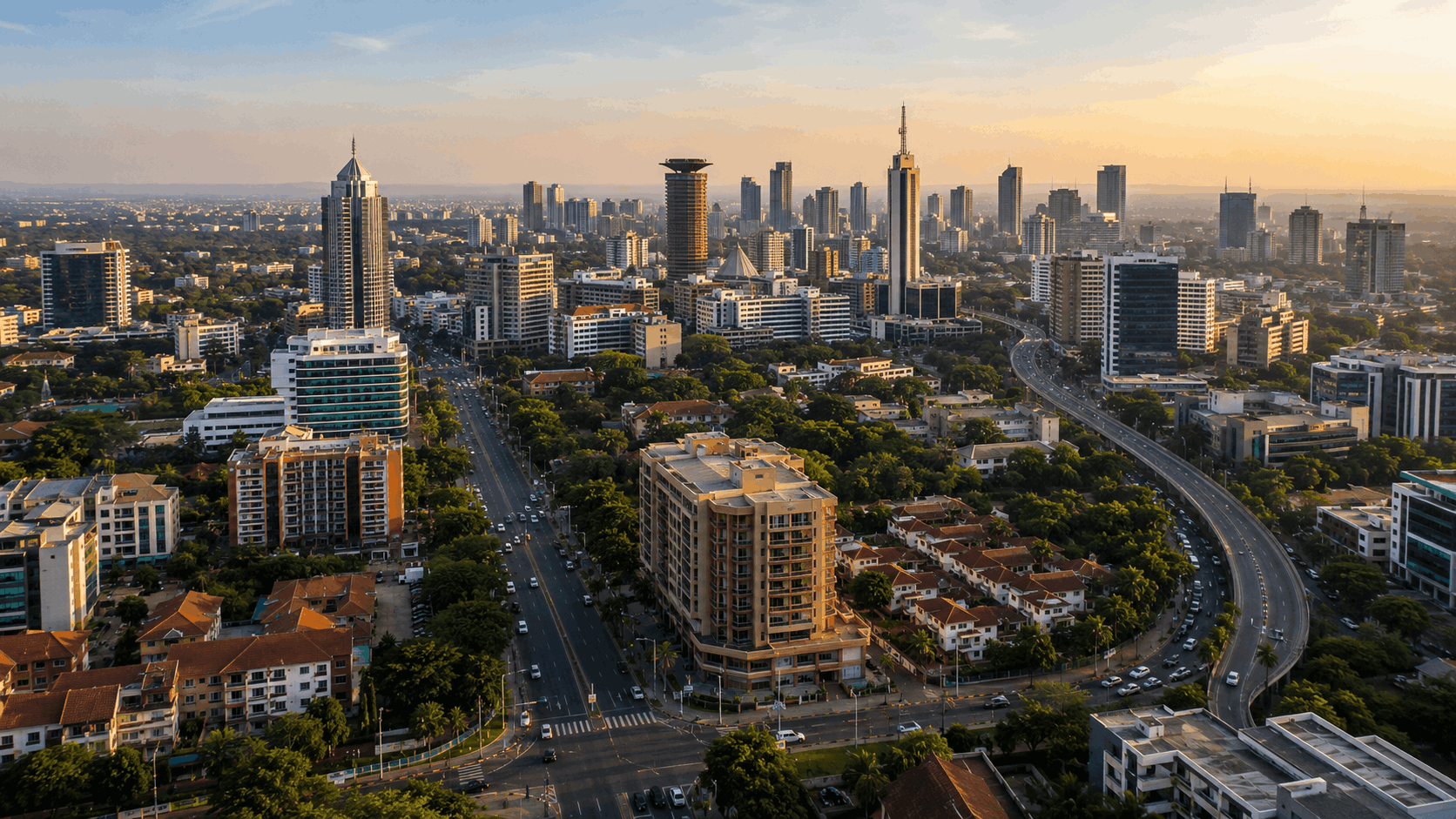
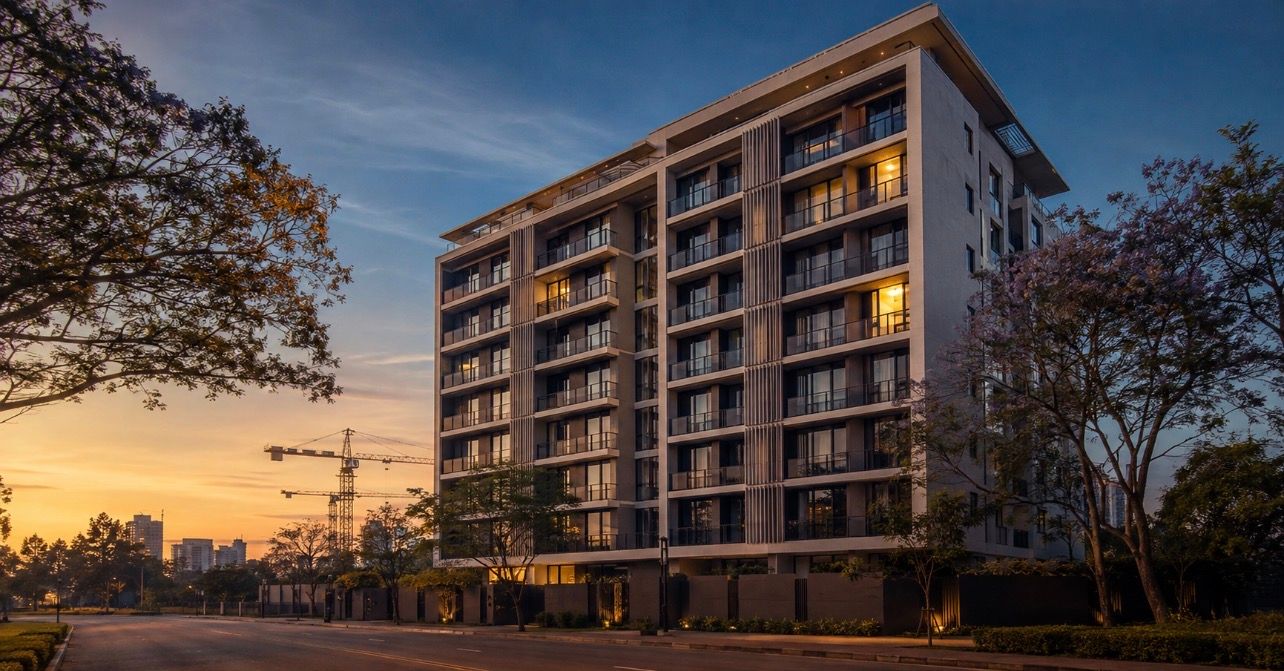
You Worked Too Hard to Lose It All.
Over KSh 593 billion. That is how much the Kenyan diaspora sent home in the first eleven months of 2025 alone. A large chunk of it went into real estate. And a painful slice of that — nobody publishes the exact number — was lost to scams, incomplete projects, and decisions made too quickly from too far away.

This article is for you if you are Kenyan, living abroad, and thinking about buying an apartment back home.
Maybe you have been thinking about it for years. Maybe you already tried once and it went badly. Maybe a cousin sent you a listing on WhatsApp last week and something inside you said this time could be different.
It can be. But only if you know what you are doing.
We are going to walk through everything — from the moment you first see a listing to the moment the title deed has your name on it. No textbook language. No legal jargon without explanation. Just the honest, practical truth from people who have seen this go right, and seen it go very wrong.
The Story That Started It
Meet John.
He lost everything.
John is an engineer. Lives in Houston, Texas. Worked hard for fifteen years.
In 2022, someone in a WhatsApp group shared a listing. Quarter-acre near Juja. Price looked reasonable. The seller seemed to know what they were talking about.
John sent KSh 2.8 million in two M-Pesa transfers. No lawyer. No title search. Just trust.
Six months later, he flew to Nairobi to check on the land.
There were three different registered owners. The seller had vanished. John recovered nothing.
Total loss — KSh 3 million, including the flights and the lawyer he had to hire after the fact.
John is not an unintelligent person. He is literally an engineer. He just did not know the specific things you need to know about Kenyan property — and nobody told him before it was too late.
This article is what nobody told John.
But before we get into the how — let us talk about the what. Because there is a reason smart diaspora buyers are choosing apartments over everything else right now.
Why Apartments
Why Most Diaspora Investors Are
Choosing Apartments Over Land.
The instinct when you think "Kenya property" is usually land. A plot back in the village. A half-acre somewhere near your parents.
That instinct is understandable. But for someone living abroad who wants income now and not in fifteen years — apartments often make more sense.
Here is why.
Land sits empty. You pay for it, and then you have to find a caretaker, deal with squatters, pay annual land rates, and watch it do nothing for years while you are in London or Dallas. An apartment in Kilimani? It can be rented out within weeks of purchase.
Apartments pay you while you wait. A 2-bedroom in Kileleshwa renting at KSh 55,000 per month — after management fees, taxes, and vacancy — gives you a net return of around 3 to 4 percent annually. That is not life-changing money. But combine it with 5 to 7 percent capital appreciation per year in a prime location, and over five years you are looking at a very different number than you started with.
Someone else handles the maintenance. A well-managed apartment block has a generator, a borehole, a security team, and a caretaker. You do not need to coordinate any of that from abroad. You just receive your rent.
They are legally cleaner. Under the Sectional Properties Act 2020 — which we will explain properly shortly — each apartment unit gets its own title deed. Your ownership is registered and specific. That is much harder to dispute than a boundary on a rural plot.
The Smart Diaspora Position
"I realized having an apartment beats owning raw land from abroad. At least I get rent — and I can manage everything remotely." — Kenyan-American investor, Atlanta
That said — apartments are only safer if you know how to buy them correctly. And that is where most people still get caught.
Here is where most buyers get it wrong...
The Mistakes
The Five Mistakes That Cost
Diaspora Buyers the Most.
These are not rare mistakes made by careless people. They are the standard mistakes made by careful, educated, well-meaning people who just did not know what they did not know.
Mistake 1: Trusting family or friends without a system behind them.
"My cousin will go and check it for me." This is the most common setup for a disaster. Your cousin loves you. But does your cousin know how to read a title deed? Do they know what to look for on Ardhisasa? Do they know the difference between a sale agreement and an allotment letter?
Probably not. And when things go wrong, asking family to be accountable is its own separate nightmare.
Use family as a first contact. Then hire a licensed agent and an independent lawyer yourself — separately, so each one is working for you and not for each other.
Mistake 2: Not doing the title search before paying anything.
Kenya has a national digital land registry called Ardhisasa. It was launched in 2021. A title search costs KSh 1,000. It tells you who legally owns the property and whether there are any mortgages, caveats, or disputes on it.
Thousands of diaspora buyers skip this step because "the agent said it's clean." That is not a title search. That is a promise. Promises are not registered at the Lands Office.
Do the search. Every time. Before any money moves.
Mistake 3: Paying before signing anything.
"Send KSh 500,000 now to lock in the unit. We have five other buyers interested." Sound familiar?
This is the single most common scam trigger in Kenyan real estate. Urgency plus distance equals dangerous decisions. A legitimate seller will always give you time to sign a proper sale agreement before they take your money. If they will not, that is your answer.
Mistake 4: Forgetting that the price on the listing is not the total cost.
Add these before you budget: stamp duty (4% of the purchase price in urban areas), legal fees (roughly 1 to 2%), search fees, service charge deposits, and the cost of notarizing your Power of Attorney if you are signing from abroad.
That KSh 10M apartment can easily cost you KSh 11M by the time you own it. Plan for 8 to 10 percent on top of the listed price.
Mistake 5: Buying off-plan from a developer you have not verified.
Off-plan means the building is not yet complete. You are buying based on a floor plan, a CGI render, and a promise. That can work — but only with a developer who has a proven track record of completing what they start.
Too many diaspora buyers have paid deposits on projects that stalled at 30 percent complete, then sat unfinished for three years while the developer cited "market conditions." Ask to see completed previous projects. Talk to people who actually bought in them. Then decide.
The Scams
The Tricks They Use.
And How to Spot Them Early.
Imagine this. You are on Instagram at 11pm. You see a gorgeous apartment listing — Westlands, fully furnished, KSh 8 million. The photos are stunning.
The person in the DMs is warm, professional. They speak good English. They send you a PDF brochure. It looks real.
They tell you someone else is about to close on it. But if you send KSh 200,000 tonight, it is yours.
That listing does not exist. Those photos were taken from a real estate website in Dubai.
This happens every single day to Kenyans abroad.
Here are the red flags. The moment you see any of these, stop. Do not try to "manage" the situation. Just stop.
"Pay today or lose it." Pressure like this is not a real market condition. It is a manipulation tactic. Take your time. Always.
Price is dramatically below market rate. A 2-bed in Kilimani for KSh 4 million? No. Current market is KSh 8 to 14 million for a decent unit. If it is too cheap, someone is stealing from you.
They resist a title search. "There's no need, the title is clean, I promise." A legitimate seller has zero reason to block you from searching a title publicly on Ardhisasa. Zero.
Payment goes to a personal M-Pesa or private bank account. Real transactions go through a lawyer's escrow account. Never to someone's personal number.
No sale agreement before payment. "We'll sort the paperwork after." This sentence has cost Kenyans millions. No paperwork, no money. Full stop.
The name on the ID does not match the name on the title deed. If the seller cannot explain this clearly and legally, walk away.
"Guaranteed rent of KSh 80,000 per month." Unless this is in writing and backed by a legal rent guarantee agreement, it is marketing. Not a promise.
Trust your instincts. If something feels off, it usually is.
Now comes the part most guides skip over...
The Verification
The Exact Steps to Verify
Any Nairobi Apartment Before You Pay.
Think of this as your pre-flight checklist. Pilots do not skip items on the checklist because "it probably looks fine." Neither should you.
01
Do the Ardhisasa Title Search
Go to ardhisasa.go.ke. You need the title number or plot number. Pay KSh 1,000. The search result tells you exactly who owns the land, whether there is a mortgage or caveat on it, and whether anything is registered that should concern you. If the registered owner's name does not match your seller's name, stop. This step alone would have saved John KSh 3 million.
02
Understand the Sectional Properties Act 2020
In Kenya, apartments are governed by this law. It means each unit in a building gets its own individual title deed — called a sectional title. When you buy an apartment, you should receive a title deed in your name for your specific unit, plus a share certificate in the Management Corporation (the body that manages the building's common areas). Ask to see the sectional plan. If the developer says "you'll get it later," get that commitment in writing with a specific date.
03
Verify the Developer
Every legitimate developer in Kenya is registered with the National Construction Authority (NCA). Ask for their NCA registration number. You can verify it at nca.go.ke. Also ask for their CR12 — a company document that shows who the directors are. If the developer cannot produce basic company documents, they are not a company you should be giving money to.
04
Confirm the Building Approvals
The county government (Nairobi City County for Nairobi) must approve every building before construction starts. Ask for the approved architectural plans — they will have a county stamp on them. Also ask for NEMA clearance for larger developments. If any of these are missing, the building could be demolished. This sounds extreme. It has happened.
05
Hire Your Own Lawyer
Not the developer's lawyer. Not a family friend who "knows a bit about law." A licensed advocate who works for you. Their job is to review the sale agreement, check the land registry independently, flag any unusual clauses, and ensure your money goes through a proper escrow account. Budget KSh 30,000 to 80,000 for this. It is the most important money you will spend in the entire process.
06
Inspect the Physical Unit
If you cannot travel to Kenya, hire an independent inspector — not the selling agent — to physically visit the unit, take timestamped photos and a short video, verify the unit number matches the sale agreement, and check that everything the brochure promises actually exists. This costs very little relative to the purchase price. Skip it and you might discover "city views" means "views of the neighboring construction site."
07
Pay Through Escrow Only
Your lawyer should maintain a client account. All purchase funds go into that account — held there until specific, agreed milestones are met. Not the developer's account. Not anyone's personal account. Escrow. If a seller resists escrow, they are telling you something important about how this will end.
08
Get Your KRA PIN and Sort Your Taxes
You need a KRA PIN to pay stamp duty at closing. If you do not have one, get it at itax.kra.go.ke — it can be done online from abroad. Also know this: if you rent the apartment out, Kenya charges 30% withholding tax on rental income for non-residents. Factor this into your return calculations before you buy, not after.
"The due diligence costs maybe KSh 50,000. The loss from skipping it can be KSh 3,000,000. This is not a difficult calculation."The Big Decision
Off-Plan or Completed?
The Honest Comparison.
This is the question every diaspora buyer hits eventually. Do you buy a completed unit you can see and touch, or do you buy off-plan at a lower price and wait for construction to finish?
Both can work. Here is how to choose the right one for your situation.
Factor
Off-Plan
Completed Unit
Entry Price
15–25% lower than completed value. Early-bird pricing.
Full market price. What you see is what you pay.
Risk Level
Higher. Dependent on developer delivering on time and spec.
Lower. You can inspect before signing anything.
Rental Income
None until completion. Could be 12–36 months away.
Can rent immediately after handover.
Payment Structure
Milestone-based installments over construction period.
Usually full payment or mortgage at purchase.
What You Need to Verify
Developer track record, NCA approval, escrow arrangement, construction progress.
Title deed, occupancy certificate, actual unit condition, service charge history.
Best For
Buyers with patience and a strong developer relationship. Long-term investors.
Buyers who want income now. First-time buyers. Anyone who cannot easily visit Kenya.
If you are buying from abroad and cannot visit Kenya to check progress — lean toward completed stock. What you cannot see can hurt you. The discount on off-plan is real, but so is the developer risk.
If you do go off-plan: tie every payment to a physical milestone, not a date. "On foundation completion" not "three months from agreement date." Foundations can be verified. Calendar dates cannot be enforced if the developer simply does not build.
The Real Numbers
The Costs Nobody Mentions
Until After You've Committed.
The listing says KSh 12 million. You think: I need KSh 12 million.
You actually need closer to KSh 13.2 million. Here is the breakdown.
Stamp Duty4%
Of purchase price, for urban properties. On KSh 12M, that is KSh 480,000 paid to KRA.
Legal Fees1 – 2%
Your advocate's fee for conveyancing, searches, and registration. Non-negotiable — get your own lawyer.
Registration & Search Fees~KSh 30K
Ardhisasa search, land rates clearance, land rent clearance, transfer registration at Lands Office.
Power of Attorney CostsVaries
If signing from abroad, you need a notarized and apostilled POA. Legal fees in your country of residence apply.
Service Charge Deposit1 – 3 mo
Most managed buildings require 1 to 3 months' service charge upfront at handover. Can be KSh 10,000–25,000 per month depending on the building.
Total Add-On Budget8 – 10%
On top of the listed purchase price. If the listing says KSh 12M, have KSh 13M+ available before you start.
And once you own it and start renting it out? Kenya charges 30% withholding tax on rental income for non-residents. If your tenant pays you KSh 60,000 per month, KRA's share is KSh 18,000. Your net is KSh 42,000. This is not optional. Build it into your yield calculation from day one.
The Returns
What You Can Realistically
Expect to Earn.
The marketing materials will tell you "10 percent yields." Let us be more honest than that.
A 2-bedroom apartment in Kileleshwa priced at KSh 9.5 million, renting at KSh 55,000 per month, gives you a gross yield of about 6.9 percent. After 30% withholding tax, 10% management fee, and an allowance for occasional vacancy, your net yield lands at roughly 3.5 to 4 percent.
That is not going to make you rich overnight. But combine it with 5 to 7 percent annual capital appreciation in a prime Nairobi suburb over five years, and the total picture is meaningfully different. You are also building equity in a market where land supply is constrained and demand from urbanisation keeps growing.
The Cytonn 2025 Nairobi Residential Report puts total returns for upper mid-end suburbs — Kileleshwa, Kilimani, Westlands — at an average of 7.1 percent, combining rental income and capital growth. That is a real number, from real data, across a real market.
The key is choosing the right location, the right building, and the right management company. A well-managed unit in Kilimani will consistently outperform a poorly managed one on the same street.
The Real Return Calculation
The rent pays you now. The appreciation pays you later. Both matter. Neither alone is the full story. A 3.5% net yield plus 5% capital appreciation per year is a 8.5% total annual return — on an asset you can see, touch, and eventually live in.
The Questions
Before You Send Any Money,
Ask These Questions.
Print these. Screenshot them. Have them open on your phone during any property call.
Q1
Title & Ownership
"Whose name is on the title deed — and can I verify it on Ardhisasa right now?" If they hesitate, you have your answer.
Q2
Payments
"Will my payments go through a lawyer's escrow account? Can you give me the account details and the advocate's name so I can verify them independently?"
Q3
Developer Track Record
"What is the last project you completed? Can I speak to someone who bought there?" A developer who has finished buildings will have buyers who can speak to that. One who hasn't will change the subject.
Q4
Approvals
"Can you send me a copy of the county-approved building plans and your NCA registration?" The answer should be immediate. Documents sent within 24 hours. No delays, no excuses.
Q5
Service Charge
"What is the monthly service charge, what exactly does it cover, and how often has it been increased in the past two years?" This is your ongoing cost. It should not be a surprise after you buy.
Q6
What You Receive
"At handover, what specific documents will I receive — the sectional title deed, share certificate, registered instrument of transfer, stamp duty receipts, and rates clearances?" Get this list in writing before you pay anything.
Q7
Delay Penalties (Off-Plan)
"If the project is not complete by the agreed handover date, what is the penalty, and is it written into the sale agreement?" If they say "we never miss deadlines," that is not an answer.
How to Do This Right
Meet Amina.
She got it right.
Amina is a nurse. Based in the UK. Saved for eight years with a very specific goal: an apartment in Nairobi she could rent out and eventually move back to.
In 2023 she flew to Nairobi for ten days. She refused to be rushed. She rejected two "amazing deals" that could not produce clean title searches. She hired a lawyer independently.
She bought a 2-bedroom in Kileleshwa for KSh 9.5 million. The title search was clean. The sale agreement was reviewed by her lawyer. The payments went through escrow.
Two weeks after handover, the apartment was rented. She has since received her rent every month without fail.
The difference between Amina and John is not luck. It is process.
The question is not whether the Nairobi apartment market is safe. In the right pockets — Kilimani, Kileleshwa, Westlands, Lavington — it is one of the most resilient in East Africa.
The question is whether your process for getting into it is safe.
At Wande Realty, we work specifically with diaspora buyers — Kenyans in the US, UK, UAE, Canada, Australia — who want to buy in Nairobi's prime areas without the fear of being conned or the exhaustion of managing everything alone from thousands of kilometres away.
We do the Ardhisasa searches. We verify developers. We coordinate with independent advocates. We do virtual site visits for signed clients. We only list properties we have checked. And we walk you through every single document before you pay for anything.
We are not trying to rush you into a unit. We are trying to make sure that when you do buy, it goes like Amina's story — and not like John's.
Browse our current verified listings at wanderealty.com/residences — or speak with one of our diaspora advisors at wanderealty.com/contact. No obligation. Just an honest conversation.
Your Summary
The Things You
Must Have Before You Pay.
✓
Clean Ardhisasa title search
Registered owner matches your seller. No mortgages, caveats, or disputes on the title. Done before any money moves.
✓
Signed sale agreement reviewed by your lawyer
Not the developer's lawyer. Yours. With unit details, price, payment schedule, handover date, and delay penalties all specified in writing.
✓
NCA registration and county building approvals confirmed
Stamped architectural plans from the county. NCA project registration. NEMA clearance if applicable. Documents — not promises.
✓
Payments through escrow only
Your lawyer's client account. No M-Pesa transfers to personal numbers. No payments to "the director's account for speed."
✓
Total cost budget prepared (not just listing price)
Listing price + 8 to 10% for stamp duty, legal fees, searches, and service charge deposit. No nasty surprises at closing.
✓
Rental income tax understood
30% withholding tax for non-residents. Built into your yield calculation from the start, not discovered on your first tax return.
✓
Physical inspection done — by you or an independent professional
Unit number matches the agreement. What was promised exists. Not just photos sent by the selling agent.
None of this is complicated. It is just a process. And a process, done consistently, is what separates the people who build real wealth in Kenyan real estate from the ones who write cautionary tales.
You have worked too hard to shortcut it.
Sources & References
- [1]Capital Business — "Diaspora remittances drive renewed property investment in Kenya." KSh 593B remittances in first 11 months of 2025 per Knight Frank. capitalfm.co.ke, March 2026.[link]
- [2]iGrand BP — "The Kenyan Diaspora Outlook Report 2025." 9 in 10 diaspora Kenyans aspire to own property back home; cautious investor sentiment; North America 56% of remittances. igrandbp.net.[link]
- [3]WKA Advocates — "What Is Service Charge? The Hidden Elephant." Sectional title deed and share certificate at handover. wka.co.ke, February 2024.[link]
- [4]DMK Law — "Understanding the Sectional Properties Act 2020." Individual unit title deeds, management corporation structure. dmklaw.co.ke, February 2026.[link]
- [5]Cytonn Investments — "Nairobi Metropolitan Area Residential Report 2025." Upper mid-end total returns 7.1%; rental yields 6.0%; Kileleshwa, Kilimani, Westlands performance. cytonn.com.[link]
- [6]National Construction Authority — NCA contractor registration and project verification. nca.go.ke.[link]
- [7]Kenya Revenue Authority — KRA PIN registration, withholding tax on rental income for non-residents (30%). kra.go.ke.[link]
- [8]Ardhisasa — Kenya's official online land registry. Title searches at KSh 1,000. ardhisasa.go.ke.[link]

Michael Baraka
Real Estate Advisor
Michael Baraka is a real estate professional with a background in Electrical and Telecommunications Engineering, bringing a unique blend of technical insight and market understanding to the property space. As the founder of Wande Realty, Michael is focused on redefining how people discover, evaluate, and invest in real estate by integrating technology with a client-first approach. His work centers on simplifying the property journey while delivering tailored solutions for buyers, sellers, and investors. Through Wande Realty, he leads a team committed to combining data-driven decision-making with personalized service — ensuring every client experiences a seamless and informed process. At its core, Wande Realty is built on a simple philosophy: real estate is not just about property, but about building lasting relationships and helping people find spaces that truly fit their lives.
Related Residences, Developments & Neighbourhoods
Featured Neighbourhood
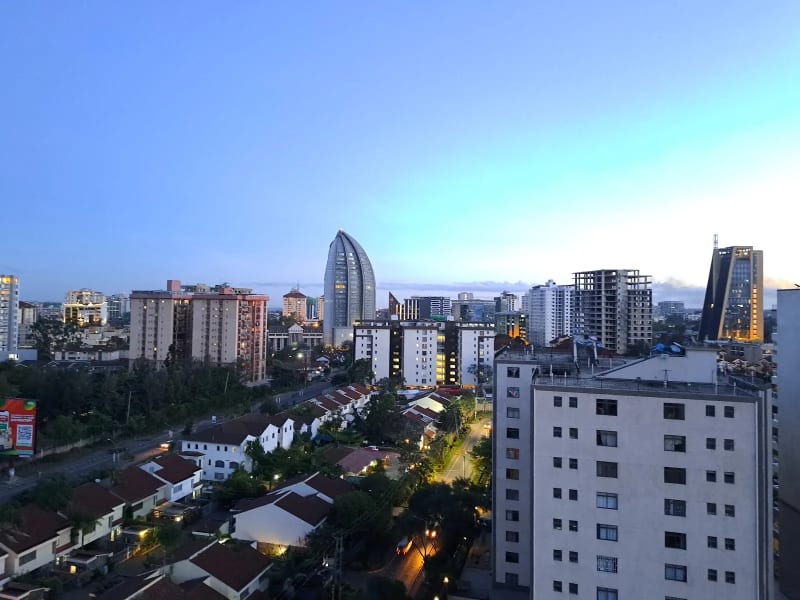
Kilimani
Nairobi's vibrant apartment district with exceptional rental demand and investment potential.

Featured Neighbourhood
Runda
Prestigious Embassy Living in a Secure Garden Suburb

Featured Neighbourhood
Kitisuru
Exclusive Green Living with Luxury Homes & Privacy