Riparian Land in Kenya: What You Must Know Before Buying, Building, or Renting
That peaceful river view could cost you millions. In Kenya, land near rivers is often protected as public riparian reserve and developments that ignore this risk face demolition, legal battles, or loss of value. Before you buy, build, or rent, here’s what you need to understand.
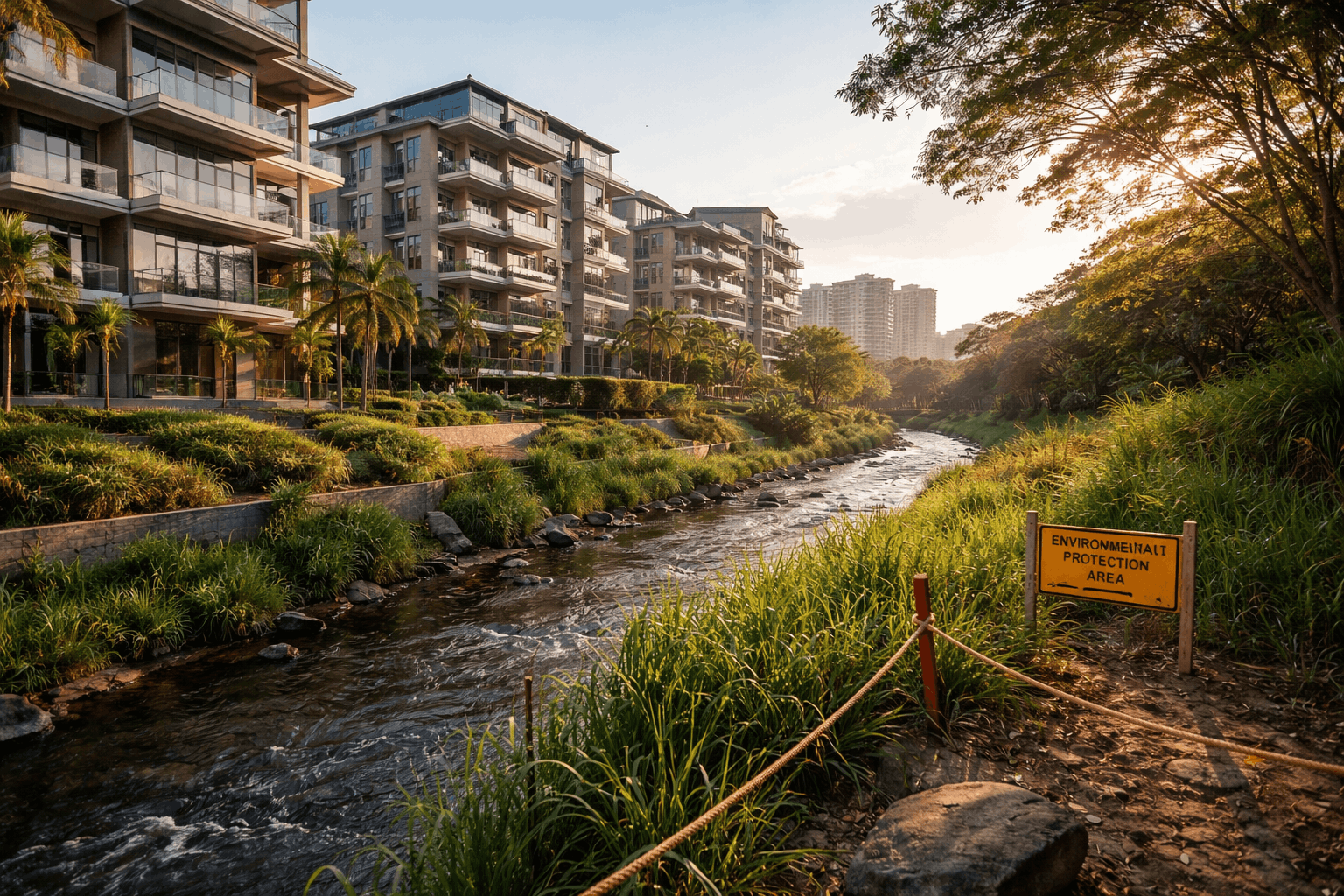
That dream plot next to a river might come with a hidden problem.
Kenyan law strictly protects riverbanks, wetlands, and water corridors as public land. If your property falls within that protected zone, you could lose it.
Here’s everything you need to know, explained clearly.
What is Riparian Land?
“Riparian land” refers to the strip of land that runs alongside a river, stream, lake, or wetland.
In Kenya, this land is legally classified as public land.
That means:
- The government owns it
- You cannot privately claim it
- You cannot develop it without approval
Even more important:
Even if your title deed includes that portion, the law does not recognize it as private land.
Under the Constitution of Kenya (Article 62), all rivers, lakes, and the land between the high and low water marks belong to the public.
Courts have consistently upheld this, meaning:
A title deed does not override the Constitution.
How Wide is a Riparian Reserve?
The size of the protected buffer zone depends on the size of the water body.
However, current enforcement standards are clear:
- Minimum: 10 meters on each side (default for all watercourses – 2025 regulations)
- Up to: 30 meters for major rivers and floodplains
This means:
- A small stream can lock up 20 meters of land (both sides combined)
- A large river can restrict up to 60 meters across
Critical detail:
The measurement is taken from the high-water mark, not the center of the river.
Many older survey plans used the center line, which underestimates the protected area. Modern enforcement uses the wider, legally correct boundary.
Which Laws Govern Riparian Land in Kenya?
Several laws work together to regulate riparian land:
1. The Constitution of Kenya (Articles 62 & 67)
- Declares riparian land as public land
- Overrides any private title claims
2. The Land Act, 2012
- Prohibits allocation of public land along rivers, streams, and wetlands
3. Environmental Management and Coordination Act (EMCA), 1999
- Prohibits development within riparian zones without NEMA approval
Penalties include:
- Fines of KSh 2–4 million
- Up to 4 years imprisonment
4. The Water Act, 2016
- Empowers the Water Resources Authority (WRA)
- Allows demolition of unauthorized structures
5. Physical Planning Laws & County By-Laws
- Require riparian zones to be clearly marked in development plans
- Allow counties to deny approvals for affected land
Real Cases in Nairobi
This issue is not theoretical — it has affected real developments:
Ukay Centre, Westlands
Built along a natural drainage channel connected to the Nairobi River. Repeated flooding and regulatory concerns have led to ongoing enforcement actions.
Spring Valley Developments, Westlands
High-end homes were constructed on riparian land along the Mathare River. Environmental activists, including Wangari Maathai, intervened, and authorities later condemned the project. Legal disputes continue years later.
T-Mall (Outer Ring Road)
Although primarily a road reserve issue, it highlights a similar risk: development on protected public land, leading to legal battles over ownership and compensation.
Nairobi Rivers Regeneration (2024–2025)
A multi-agency initiative is actively:
- Mapping all river corridors
- Flagging encroachments
- Enforcing compliance
This is not a future risk — it is happening now.
What This Means for You
Buyers & Homeowners
Main Risk: Buying property inside a riparian reserve
- You cannot build or extend into the restricted zone
- The government can reclaim that portion
- Compensation is unlikely
Developers
Main Risk: Building without proper approvals
- Projects can be stopped or demolished
- Permits can be revoked, even after completion
- Losses can run into millions
Approval does not guarantee long-term protection.
Tenants & Renters
Main Risk: Living in a non-compliant building
- If the building is condemned, your lease may end abruptly
- Limited legal protection unless clearly stated in your agreement
Due Diligence Checklist (Non-Negotiable)
Before committing to any property:
- Check satellite maps (Google Maps / Earth) for nearby water bodies
- Hire a licensed surveyor to confirm boundaries and flood lines
- Request:
- NEMA approval or EIA report
- WRA confirmation
- Verify with authorities for any enforcement notices
- Visit the site during rainy conditions if possible
For developers:
Budget for design changes if riparian issues arise
For renters:
Include a lease clause allowing exit if the property is declared non-compliant
Common Questions
1. Can part of my land be public even with a title deed?
Yes. If a riparian reserve exists within your plot, that portion is legally public, regardless of your title.
2. How do I check if a property is affected?
- Look for nearby rivers or drainage channels
- Hire a surveyor
- Confirm approvals with NEMA and WRA
3. What happens if I build on riparian land?
You risk:
- Stop-work orders
- Demolition
- Heavy fines or legal action
4. Is enforcement actually happening?
Yes — and it’s increasing. The Nairobi Rivers Regeneration initiative is actively identifying and acting on violations.
The Bottom Line
Riparian land law is one of the most actively enforced areas of property law in Kenya today.
The key reality is simple:
You may legally own land but still not have the right to use part of it.
With proper due diligence, this risk is avoidable. Without it, the consequences can be severe.
Wande Realty Advisory
At Wande Realty, every property undergoes thorough due diligence, including riparian and environmental checks.
If you’re unsure about a property, speak to us before you commit.
Legal Disclaimer
This article is for informational purposes only and does not constitute legal advice. Always consult a qualified lawyer and licensed surveyor before making property decisions.

Related Residences, Developments & Neighbourhoods
Westlands· Westlands,Nairobi.
an exclusive, luxury residential development located on Brookside Gardens Drive in Westlands, Nairobi.
Where luxury meets comfort.

Kilimani· Menelik Road, Off Ngong Road, Kilimani, Nairobi
Modern 2 Bedroom Apartment for Sale in Kilimani
Modern urban living with strong investment potential in Kilimani

Westlands· Brookside Grove, Westlands, Nairobi
Luxury Apartments for Sale in Brookside, Westlands
Where Luxury Meets Strategic Brilliance

Kilimani· Elgeyo Road, Kilimani, Nairobi
Ultra-Luxury Apartments for Sale in Kilimani, Nairobi
Where Bespoke Luxury Meets Smart Urban Living
Featured Neighbourhood
Kilimani
Nairobi's vibrant apartment district with exceptional rental demand and investment potential.

Featured Neighbourhood
Runda
Prestigious Embassy Living in a Secure Garden Suburb

Featured Neighbourhood
Kitisuru
Exclusive Green Living with Luxury Homes & Privacy